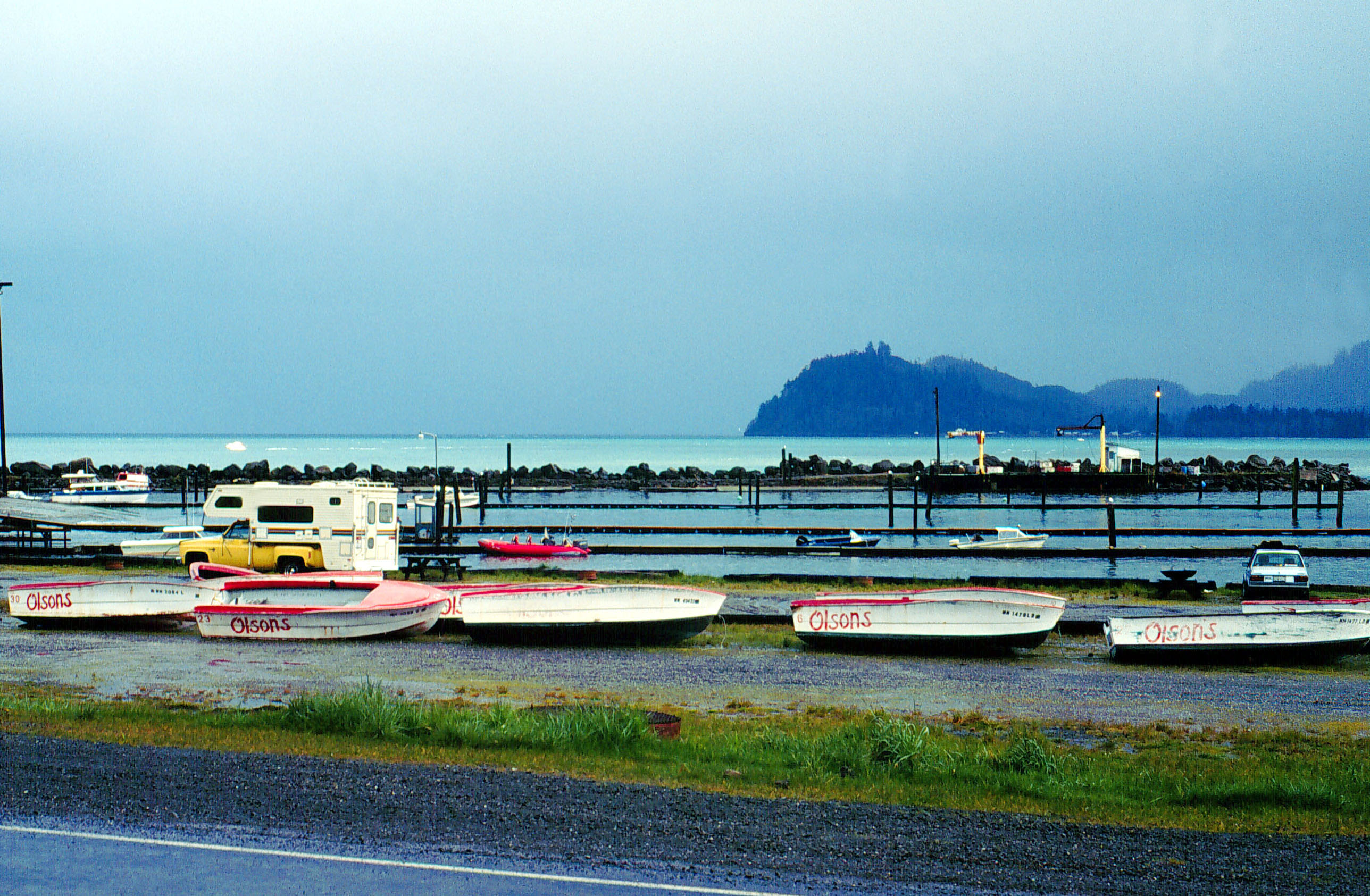
Small fishing boats beside the harbor in Sekiu, with wooded headlands across the water

SMALL-BOAT FUN FISHING
A PERSONAL NOTEBOOK
SEKIU, WASHINGTON

SEKIU,OH,SEKIU.

Slow mornings.
Small boats.
Very good stories.

COME ON BOARD

THE STRAIT OF JUAN DE FUCA / A FISHING NOTEBOOK

SOMEWHERE BETWEEN THE KELP & THE NEXT CAST

You don’t need
a big boat
to have
a good story.

A little red rental boat. A portable fish finder. And a few things learned along the Area 4–5 boundary.

SEVEN NOTES FROM THE WATER
A DAY’S STORY, BACK AT THE DOCK.
PHOTO FROM THE ORIGINAL NOTEBOOK.
FIELD NOTE / 01BEFORE HEADING OUT

Before Leaving the Dock

A few things I keep ready in a little rental boat.

With a little boat, I pick good-weather days. Sekiu has often been calmer in the morning on my trips, with wind picking up in the afternoon. I try to be back before three, earlier if conditions change.

We usually fish close to shore, but the current can be strong. Keep your life jacket on. Being able to see land does not make it an easy swim.

WORN & WITHIN REACH / AI-GENERATED
Life jackets · Marine radios

My phone has generally worked out there, but I still like having a waterproof, floating marine VHF radio on me. Fog can get thick enough that you can barely see ahead, so GPS is a must for me. Bring a whistle or horn, too.

The little 15 hp motor does not use much fuel in my experience. The rentals have come with a full tank, but ask them to confirm that when you book, and check before leaving.

One of my most important tips with these rental boats: keep the motor running while fishing. I leave it idling in neutral between moves. The last thing I want is to shut it off in a strong current and then find that it will not start again. We need to reposition often anyway, so I keep it running and stay ready to move.

More safety gear: marine emergency kits · distress lights · personal locator beacons.
SEKIU / SMALL-BOAT FUN FISHING
FIELD NOTE / 02BACK AT THE DOCK

Let Someone Else Finish the Job

After a day in a little boat, sometimes the best thing to do is hand over the fish.

By the time I get back to Sekiu, I am usually pretty tired. Small-boat fishing is a lot of fun, but it takes something out of you. Then you look at the fish and remember there is still one more job.

There is a fish-cleaning table out on the long dock, with a faucet and running water. If you have the energy, you can clean and fillet your catch right there. It is a useful setup. I just do not always feel like using it after a full day on the water.

Up from the boat launch, at the spot marked by the red arrow below, there is a place that will clean and fillet the fish for you. That is the option I like when I am ready to be done.

ONE LESS JOB AT THE END OF THE DAY. The fish-cleaning spot I use in Sekiu, marked with a red arrow. Map imagery: Google Maps; annotated screenshot supplied by the author.

The public restrooms there are clean, too. I drop off the fish, return the rental boat, use the restroom, and get my things sorted out. Then I go back to pick up the fillets. It turns the last part of the trip into a much easier routine.

The prices I have seen were about $1 per black rockfish, and usually $3–$4 for a lingcod, depending on its size. Check the current price when you drop off your catch.

I enjoy catching the fish. After a long day in a small boat, I am perfectly happy to let someone else finish the job.

SEKIU / SMALL-BOAT FUN FISHING
FIELD NOTE / 03KELP & BLACK BASS

Black Bass Over the Kelp

One of the most fun bites I have found around the Area 4–5 boundary.

THE WEEDLESS JIG / GEAR ILLUSTRATION
THE KELP EDGE / CONCEPT ILLUSTRATION, NOT A NAVIGATION CHART

I kept casting straight into the kelp around the Area 4–5 boundary because that was where I was seeing black bass. The problem was that I was also finding the kelp with nearly every cast. A normal jig head would come back carrying a little green souvenir, or not come back cleanly at all.

Switching to a weedless jig head made the whole thing a lot more fun. It let me throw into the kelp and work the bait back without getting hung up as often. It is not magic, but it gave me enough clean casts to keep trying the places that looked good.

What surprised me was how often the bite happened right at the top, or just under the surface. I would cast into the kelp and reel it back the way I would for freshwater bass. Then a black bass would suddenly grab it. That quick hit and pull feels very different from dropping straight down for other rockfish, and the fight is a lot of fun on a small boat.

When getting stuck in the kelp starts to feel annoying, I have also had good luck moving a little farther outside it. I look for baitfish or a school near the top and cast there instead. Those fish are harder to find than the ones holding in the kelp, but once I find them, they can bite just as well.

For me, that is the fun part: cast, reel, get surprised, and try not to donate too many jig heads to the kelp.

SEKIU / SMALL-BOAT FUN FISHING
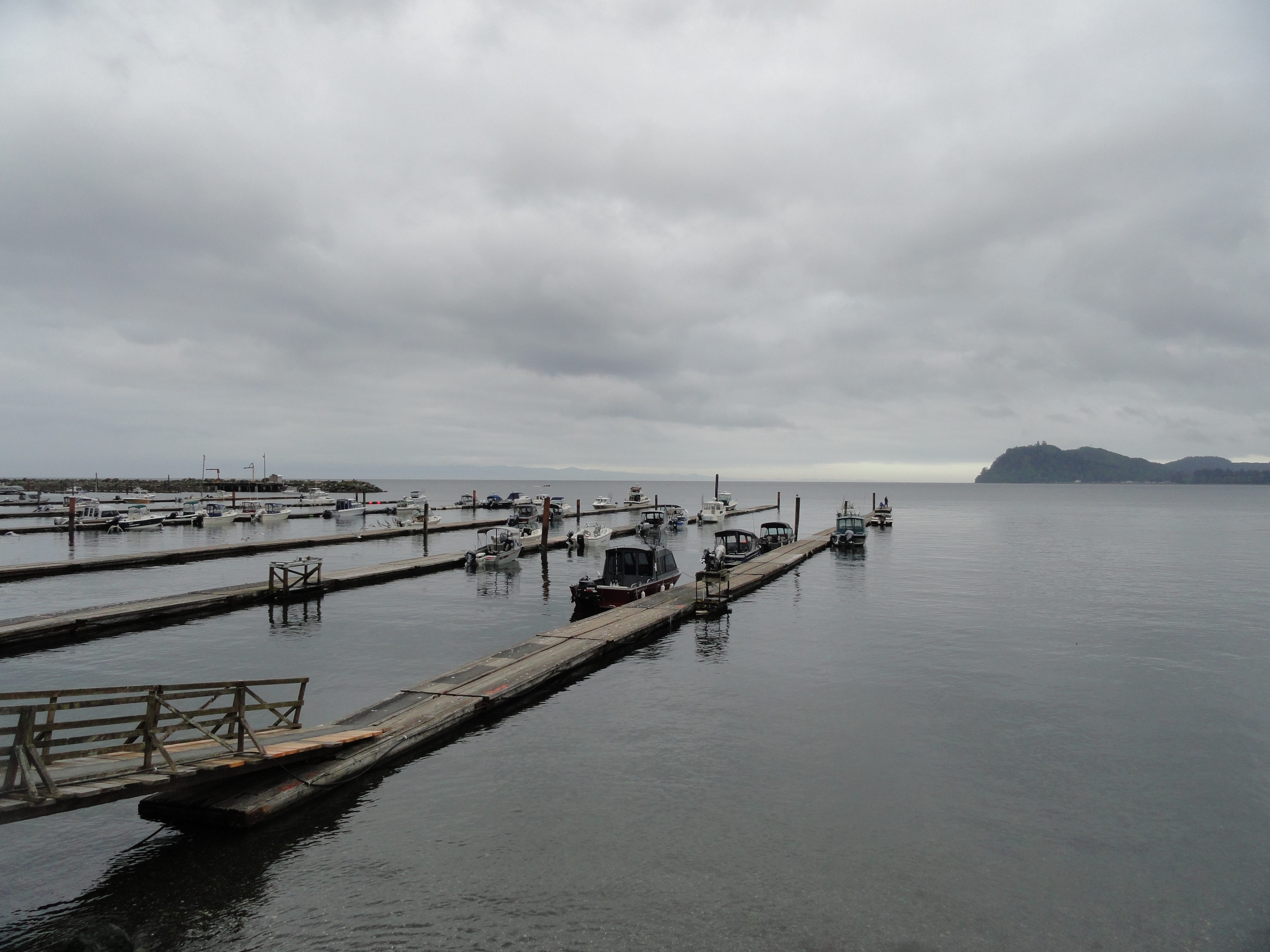
Fishing boats at Van Riper’s docks in Sekiu

LITTLE
BOAT.
BIG DAY.

FROM THE NOTEBOOK“The scenery is good the whole way.”

VAN RIPER’S DOCKS, SEKIU
LORNE KELLY / CC BY-SA 3.0 · CROPPED
PHOTOGRAPH SOURCE ↗

FIELD NOTE / 04THE LITTLE RED BOAT

A Little Red Boat in Sekiu

A low-key way to get out, fish hard, and enjoy the ride to the Area 4–5 boundary.

VAN RIPER’S LITTLE RED RENTAL BOATS / ORIGINAL NOTEBOOK PHOTO

When I rented one of the little red boats from Van Riper’s, it was $220 for the day. If you do not mind a small boat, it is an easy way to get out in Sekiu and have a lot of fun rockfish fishing without making the whole day feel like a big expedition.

The boat is only 16 feet with a 15 hp motor, but three of us had plenty of room to fish. On my trip, rentals were available from July through late September. The run to the Area 4–5 boundary—where I like to look for black bass—took roughly 40 to 60 minutes. With three people aboard, we could still get it up on plane and see about 10 to 15 mph, so it never felt painfully slow.

It is a simple, tough little fiberglass boat. Do not expect it to be spotless, but it felt solid enough that I was able to relax and enjoy the day. The motor was not my favorite part, so I personally felt more comfortable keeping it running while we drifted instead of shutting it off offshore. There was plenty of gas for a full day of fishing.

My favorite route is to stay along the shoreline on the way to the Area 4–5 boundary. It feels less intimidating, the scenery is good the whole way, and every now and then there is even a whale to look at.

Watch a day on a Van Riper’s rental boat on YouTube

SEKIU / SMALL-BOAT FUN FISHING
FIELD NOTE / 05BRING YOUR OWN SONAR

My Rental-Boat Fish Finder Setup

The same portable setup I use in a dinghy or kayak, with a little more room to move around.

THE PORTABLE FISH FINDER SETUP / AI-GENERATED ILLUSTRATION

These rental boats are bare boats: motor, seats, and room to fish. I bring the fish finder kit from my kayak fishing gear instead of trying to make a permanent setup in the boat.

The transducer goes on a portable clamp-on arm at the back of the boat. There is a good edge beside the outboard where it fits tightly. I leave the arm up while getting to the spot, then swing it down when I want to look around and find fish.

The display, battery, and tackle all travel together in a milk crate. There is not really a natural place to mount a fish finder on these boats, so the crate keeps everything together: it comes out of the car in one piece, goes into the boat in one piece, and comes back out the same way.

SEKIU / SMALL-BOAT FUN FISHING
FIELD NOTE / 06ON THE AREA 4 SIDE

Lingcod on the Area 4 Side

The bite can be simple. Getting the fish into the boat is the part that gets interesting.

THE INLINE BANANA-WEIGHT RIG / AI-GENERATED ILLUSTRATION

Just on the Area 4 side of the Area 4–5 boundary, 40 to 60 feet has been a good range for me. Drift along and watch the bottom change, or stay over one rocky hump that looks like it should be holding fish. Both ways can work.

A 4 oz soft lure with a jig head will do the job. Sandfish work too. But when a little greenling comes up, I like a pre-tied two-hook mooching rig best, with a 4 oz banana spin sinker inline ahead of it. The hooks are already on the leader, so I just set the front one above the mouth and trail the other beside the dorsal.

A lot of the good ones do not really get hooked at first. They just keep hold of the bait and follow it up. That is when I slow down. I keep the fish just under the surface, make sure it is still there, then bring the net in. With a big lingcod, hold the net upright as it goes in—the handle and hoop take a lot less abuse that way.

Once it is in the boat, it is all teeth, gill plates, hooks, and bad ideas. I keep my hands clear until the fish settles down.

Current Area 4 rules ↗

SEKIU / SMALL-BOAT FUN FISHING
FIELD NOTE / 07FINDING THE SCHOOL

Black, Black, Black

Keep moving until you find the school. Then it happens fast.

BLACK, BLACK, BLACK / ORIGINAL NOTEBOOK PHOTO

Around the Area 4–5 boundary, catching black rockfish is mostly about finding the school. One or two marks are not enough. I am looking for bait popping on the surface, fish breaking around it, or a solid cloud on the fish finder.

When I see something that looks right, I cast, reel, and give it about ten minutes. If nobody shows up, I move. Then I do it again. It can take an hour or two of looking, but once you land on the right school, the seven-fish limit can happen in less than an hour.

After an hour or two of searching without finding the school, my own energy starts to drop. That is when I send it to the bottom for a little while. A China rockfish or another bottom fish usually gives me a couple pulls, and after releasing them, I am ready to go looking for the black school again.

It is not complicated. Keep moving until you find them. When you do, it is black, black, black.

SEKIU / SMALL-BOAT FUN FISHING

THAT’S THE END OF THIS LITTLE TIDE LINE — FOR NOW.

SEE YOU
ON THE
WATER.

Made for slow mornings,
small boats, and good stories.

BACK TO THE SURFACE ↑
THE NOTEBOOK / CONTENTS

GO FISH.

PHOTOGRAPHY & DESIGN

From Sekiu,
with credit.

Harbor cover photograph: U.S. Department of Transportation, public domain. Cropped for the page layout.

Fishing boats in Sekiu — Wikimedia Commons ↗

Van Riper’s docks: Lorne Kelly, CC BY-SA 3.0. Cropped for the page layout; the adapted photograph is shared under the same license.

Van Riper’s docks — Wikimedia Commons ↗ · Original image

Fishing photographs and the original five stories are from the Sekiu Small-Boat Fun Fishing notebook.

Fish-cleaning location map: Google Maps imagery, with the author’s red-arrow annotation. The supplied screenshot is reproduced in full.

The weedless-jig, kelp-edge, portable fish-finder, banana-weight rig, and safety-gear images are AI-generated editorial illustrations. The kelp scene is a concept illustration, not a photograph of a specific location or a navigation chart.

Editorial layout inspired by i-D’s Elle Fanning spotlight. Featuring stories and imagery from Sekiu.